Saalua

AB221

Saalua

Region of origin: Iraq

A ghoul-like demon comparable to a succubus, the saalua supposedly lived in cemeteries and served as a warning to not venture out alone at night, as she would seduce men she encountered and force them into servitude.

Just a note on this one: I took heavy design influence for it, particularly the black and gold motif, from the short film Baghdad Night by Furat Al Jamil which she made in part to help prevent tales of the saalua and similar folklore of her community from slipping into obscurity. Given this and a ton of other creatures don’t have much more of an internet presence than a quick blurb on Wikipedia without some deep diving that seems like an endeavor worth supporting.

Originally posted on Tumblr on April 8, 2016

Muldjewangk

AB220

Muldjewangk

Region of origin: Lake Alexandrina, South Australia

A river monster (or monsters) from Australian aboriginal stories, the muldjewanks were dangerous creatures once said to exist in what is now the Murray River around Lake Alexandrina. Stories of the muldjewangk had them vary in size; from smaller man-sized ones, who would come to the river’s edge to destroy fishermen’s gear and snare children who ventured too close, up to gargantuan monsters capable of attacking steamships.

Originally posted on Tumblr on April 7, 2016

Kinnara

AB219

Kinnara

Region of origin: Southeast Asia

Related to a similar creature in Hindu mythology, the Kinnara (males, or its female counterpart the Kinnari) are a race of man-birds in Buddhist stories renowned for their kindness, acting as guardians of mankind and symbols of everlasting love. They are said to be fond of music and often depicted holding manjira or other traditional instruments.

Originally posted on Tumblr on April 6, 2016

Lou Carcolh

AB218

Lou Carcolh

Region of origin: France

A serpent with a mollusk’s shell said to inhabit cave systems in the southwest of France. Instead of going out to hunt its prey, Carcolh would stay in its cave and reach out with the sticky tendrils around its mouth, which could stretch for miles, to ensnare people and livestock which ventured too close and were dragged back down to the lair to be consumed.

Originally posted on Tumblr on April 5, 2016

Luison

AB217

Luison

Region of origin: Paraguay

The seventh of the seven cursed children of Guaraní mythology, Luison was a god of death and the night; he lived in and guarded cemeteries, fed on dead bodies and appearing to those who were about to die. As European influence reached the Guaraní, Luison gained a more bestial countenance and became more prominently analogous with werewolf stories, replacing his traditional death-god role.

Originally posted on Tumblr on April 4, 2016

Pugot

AB216

Pugot

Region of origin: Ilocos, Philliipines

A looming, headless creature that despite its brutish appearance is relatively harmless to people; hiding in dark places such as abandoned houses or living in duhat trees. They’re capable of shape-shifting, taking on forms such as hogs or dogs, and can move at great speeds which they use to catch their prey: insects, snakes and other small animals which the Pugot eat by stuffing them down its neck-stump hole. Pugots will often be blamed for stealing women’s underwear off clotheslines.

Originally posted on Tumblr on April 3, 2016

Mandy

AB215

Mandy

Region of origin: British Columbia, Canada

Added to the collection at the Quesnel & District Musem and Archives in 1991, Mandy’s anonymous donor claimed the doll was haunted; hearing laughter and finding opened windows in the room she was kept. Since joining the museum, poltergeist-like occurrences are said to follow the doll around: objects moved or lost, rooms trashed, other dolls on exhibit damaged. Mandy was eventually set up in her own case, given a small lamb toy for company, from where visitors and museum staff report disturbances to nearby electrical devices and the doll seeming to change positions or be watching them.

Originally posted on Tumblr on April 2, 2016

Humans

AB214

Humans

Region of origin: Africa

With variations and origins appearing for centuries in mythologies and folklore on nearly continent, stories attribute these creatures with great feats of destruction or creation but mostly they just wasted their time futzing around on the Internet and generally being dicks to one another. Accounts persisting to this day claim humans actually exist but most sightings are written off as misidentified apes or a bear with a skin condition.

Originally posted on Tumblr on April 1, 2016

Ghillie Dhu

AB213

Ghillie Dhu

Region of origin: Scotland

One of the faerie folk of Scottish folklore who clothes himself in moss and leaves and lived a solitary existence in the forests of Gairloch. Unlike a lot of his ilk, he is helpful rather than mischievous or malicious, helping lost travelers find their way and being especially protective of children. Ghillie Dhu sightings occured throughout the late Eighteenth century until a group of hunters attempted to capture him, but he was able to elude them and seemingly never appeared to people again. It’s theorized he was based a real man who lived in those woods, attributing him a fae nature as folk tales grew and spread.

Originally posted on Tumblr on March 31, 2016

Mamlambo

AB212

Mamlambo

Region of origin: Southern Africa

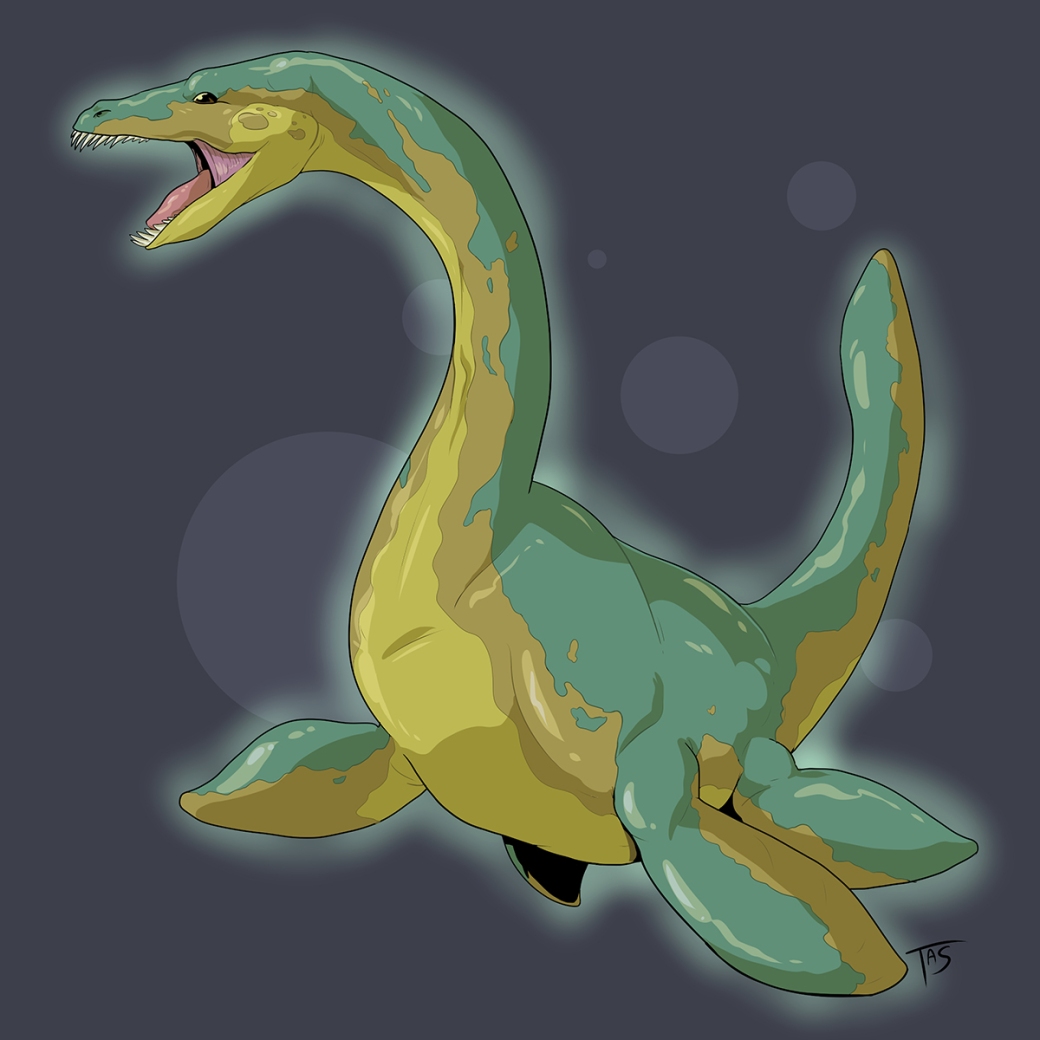
Associated with a Zulu river deity of the same name, the Mamlambo is a cryptid whose various descriptions broadly add up to a elasmosaur-like animal, as well as being said to possess a faint green glow and a penchant for sucking out the brains of its victims. A rash of drowning deaths in 1997 were popularly attributed to being the work of Mamlambo.

Originally posted on Tumblr on March 30, 2016